🤓 Smarty Pants
Glutathione: Your Body's Master Antioxidant
Think antioxidants are just something you get from berries and supplements? Your body's making its own master antioxidant right now, and it's called glutathione.
This powerful molecule is your cells' most abundant antioxidant, protecting everything from your cellular powerhouses (mitochondria) to your DNA. Your body manufactures it from three simple amino acids: cysteine, glycine, and glutamine. It's literally built from the protein you eat.
Here's the fascinating part: research on human skin cells shows that your glutathione levels significantly influence how your cells age, and depletion plays a major role in the aging process. Those wrinkles? They could be partly a glutathione story.
The decentralised health truth? While glutathione supplements are everywhere, your body's natural production depends on having the building blocks—quality protein for those amino acids, plus key nutrients like selenium and vitamin C (like we just saw). Supporting your body's own glutathione factory through whole foods, adequate protein, quality sleep, and movement is more powerful than any pill. Your cells are brilliant chemists. Give them the raw materials and let them work their magic.
🔥 Deep Dive DL;TL
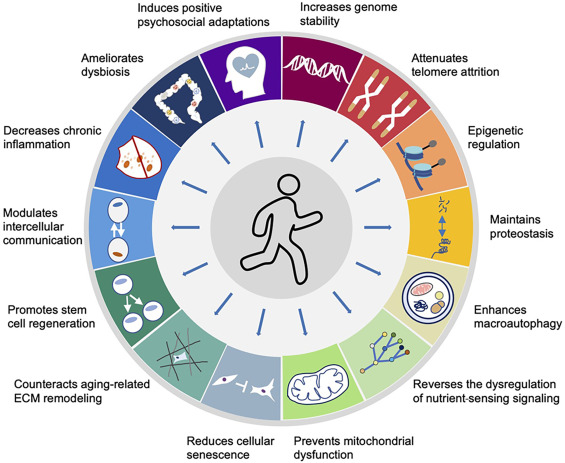
Movement as Medicine: Erwan Le Corre on Reclaiming Your Body's Natural Wisdom
Meet Erwan Le Corre: French-born movement pioneer, founder of MovNat (Natural Movement) and BreathHoldWork, and holder of the United States national record for breath-holding at an astonishing 7 minutes and 29 seconds.
Erwan has spent decades studying the power of movement and breath, teaching people around the world to reconnect with their body’s primal wisdom. It seems we've spent millions of years perfecting the art of human movement, only to forget it all in a single generation.
Erwan believes our bodies have been quietly caged by modern life. And the key to breaking free? It’s simpler than you think. You can watch the full podcast here or let’s joyfully jump into the highlights now.
The Movement Patterns We Were Born With
Have you noticed that every single child, in every culture, progresses through the exact same movement sequence? Crawl, roll, squat, stand, walk, run, jump, climb. No one teaches this. It’s hardwired into our DNA — a universal human program that has been refining itself for millions of years.
So why can’t most adults do a simple ground transition or hold a balanced squat?
Erwan’s answer is brutally simple: neglect, not aging.
We’ve confused looking fit with being capable.
Elite athletes, special operators, even professional fighters often struggle with basic natural movements because modern training — and modern environments — have systematically erased these patterns from adult life.
And then there’s the real kicker: we’ve built what Erwan calls “movement cages” around ourselves. Walk a few steps, sit in a chair, stand, move to the next seat, sit again. Our rectangular environments — chairs, cars, couches, desks — have shrunk our movement vocabulary down to almost nothing. And our bodies are paying the price.
Children Know Something We've Forgotten
Watch a toddler for five minutes: effortless transitions from ground to standing, fearless climbing, complete body integration. They aren’t doing “exercises” — they’re simply being human. As Erwan says beautifully:
“Kids are the fountain of youth. Watch what they do — then do it.”
But here’s the tragedy: by age seven, most children have already begun losing this movement genius. Society trains it out of them, one hour of sitting still at a time. By adulthood, what was once our birthright feels impossible.
“If you don’t practice natural movement, you lose it — not because of age, but because of neglect.”
What Real Fitness Actually Looks Like
So what does all this mean for us? Erwan's definition of fitness completely reframes the conversation: Can you crawl, climb, jump, balance, and hang? Can you get up off the floor without using your hands? Can you carry your child to safety if needed? This isn't about glutes, abs, or how much you can lift in a climate-controlled gym. It's about being able to operate your body in the real world, and being physically useful, capable, and confident.
Erwan asks the important question: if you needed to move furniture or respond to a real threat or an emergency, would you be able to respond physically? At these times, our ability to do endless crunches may not be as helpful as our ability to lift and carry somebody, or climb and jump over an obstacle, or get out of a tight spot to reach somebody who needs our help.
Of course, staying generally fit is incredibly valuable. but so is our ability to move our body as it was intended to be used.
Start simple. Spend ten minutes a day taking the opportunity to re-introduce yourself to "natural movements". Move on uneven surfaces whenever possible. Swing on a monkey bar when the chance arises. Walk on a brick fence and practice your balance. Get in touch with your inner child-like movements and remember what it was like to feel confident in your body and move that way.
These aren’t skills you need to learn — they’re capabilities you need to reclaim. The question isn’t whether you can. It’s whether you’re willing to try.
The Breath-Hold That Changes Everything
Every time you change your breath, you trigger immediate physiological, chemical and neurological responses throughout your entire body. And whilst we've all been told how beneficial breathwork is, this comment from Erwan made me pause:
"Be careful the way you modify your breathing, because it does have an impact and that impact is not always beneficial. It's not always like oh I see rainbows and I feel relaxed and no, it's not always that. It depends on what your current state, physiologically and neurologically is, and what do you need.'
When we modify our breath, we invoke changes. Should we hold after an inhale? After an exhale? Not at all? Each one does something different.
Erwan is a trainer of breath-holds, but his approach is unique. He sees breathwork as a direct encounter with your internal stress tolerance. That desperate urge to breathe? It’s not about running out of oxygen — it’s rising CO₂ levels triggering your brainstem’s alarm system.
Training yourself to tolerate higher CO₂ through progressive breath-holds rewires how your body responds to stress. Something tied very close to longevity.
But here’s the part that really stayed with me: breath-holds force radical honesty. There’s no music, no ritual, no soothing backdrop. Just you, your nervous system, and the truth of how you respond under pressure and the rapidly declining levels of oxygen in your body.
Your reaction in that moment — panic or calm, trust or fear — reveals exactly who you are. And more importantly, who you can choose to become.
The patience, trust, and equanimity you develop during breathwork don’t stay in the practice.
They spill into everything. If you can find calm in a voluntary breath-hold…you can find calm anywhere.
☀️ Sandy's Sunshine
Your Glutathione Glow-Up Starts With… Vitamin C
Want to give your glutathione — your body’s master antioxidant and detoxifier — the raw materials it can’t function without? Start with Vitamin C. It’s the spark that keeps glutathione recycled, activated, and ready to protect your cells all day long.
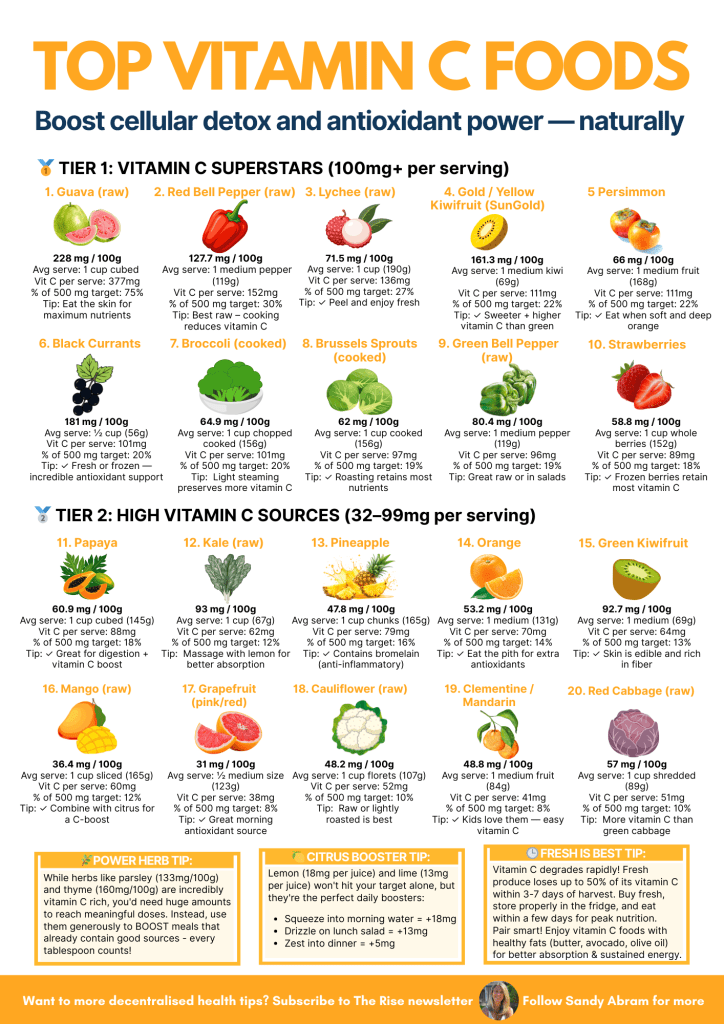
Here’s the easy win: add one high-Vitamin-C food to your meals today. A kiwifruit, a handful of papaya, some red capsicum, a squeeze of lemon… Small dose, big impact. And to help you along, here's a handy Top Vitamin C Foods chart to print up and keep handy. Your mitochondria will thank you for it!
🔢 Number Crunch
20,000 — The number of breaths you take each day. Every one is a chance to shift your nervous system — for better or worse.
And that's a wrap my friends! I hope you have a beautiful week ahead and if you have any questions, comments or feedback, please hit reply. I read every email.
P.S What did you think of today's newsletter? I'd love to know. Just hit reply and share your thoughts.